Robot identity, the requested task, room state and the applicable permission.
Ground robotics
Sentryn
Robotics.
Make operational permissions explicit around ground robots.
Sentryn Robotics is the product family for governance around mobile ground robots. The initial validation focus is task permissions and operating-area constraints in a bounded physical demonstrator.
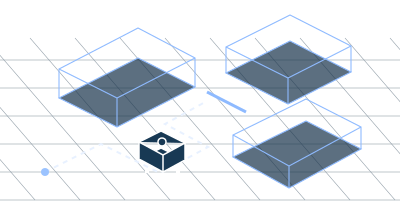
Conceptual operating environment · not a live system
Current scope & engagement
Validation focus: a bounded ground-robot demonstrator, with permission changes, defined system responses and an agreed evidence scope.
The operational question
May this robot carry out this task in this space under the conditions that apply now?
A robot’s permission to enter a room is withdrawn.
ILLUSTRATIVE SCENARIOEvaluate the permission change; define the connected robot’s response within the integration.
Record the evaluated facts, decision and observed response separately.
Boundary: The robotics integration must define and test the response. A permission decision alone is not a safety-certified stop.
Integration input
Robot state + task request + operating-area constraints
Validated interfaces and operating assumptions define the scope.
Intended outcome
Scoped permission decision + traceable record
Readiness must be established for the specific system and use case.
Sentryn Robotics / Applications
Governability in action.
Four original Sentryn films illustrating shared operating environments, authority and authorised continuation. These principles inform ground-robotics research and integration.
01 / Shared environments
The shared moment.
An illustration of multiple capable actors sharing one operating environment.
The film could not load. Use the direct film link above or reload this page.
02 / Multiple systems
The common authority.
Why permissions should remain consistent across different systems and operators.
The film could not load. Use the direct film link above or reload this page.
03 / Indoor robotics
Authority in a shared space.
An illustrative healthcare scenario involving task permissions and physical boundaries.
The film could not load. Use the direct film link above or reload this page.
04 / Ordered action
The authorized sequence.
An illustration of holding, clearing and releasing actions in a permitted order.
The film could not load. Use the direct film link above or reload this page.
All four films are cinematic, conceptual illustrations, not footage of a validated Robotics product, customer installation or live system. The applicable permissions and responses must be validated for each connected robot.
Next engagement: Agree one task, one integration boundary and one testable permission-change scenario.
From operating question to evaluation
Define a useful robotics evaluation.
For robot operators, facility teams and system integrators investigating mobile robot task permissions in shared spaces. Start with one robot, one task and one permission change.
The operating question
What should happen when a robot is assigned a task but permission to enter a room is withdrawn? Define the task, the shared space and who may change the permission.
Inputs to establish
Robot identity, requested task, room or zone state, the permission source and an agreed system interface. Define timestamps, acknowledgements and the limits of state observations.
Responsibility boundary
A governance decision and the observed robot response are separate events. The robot controller, local safety functions and operator remain within their existing responsibilities; any enforcement interface needs its own validation.
Proposed acceptance evidence
A repeatable permission-withdrawal test, expected controller responses, timeout cases and records distinguishing a decision, command acknowledgement and observed motion. Agree measurable criteria before testing.
Current public evidence: illustrative films and a bounded physical-validation direction. This is not a generally available fleet integration or a safety-certified stop function.
Explore architecture and execution-control research ↗Scope an evaluation ↗
Start with an operation.
Define what must be governed.
For operators, system builders and integration partners.